
Caravaggio’s life was marked by conflict, crime, murder and exile, and yet his work transcends his violent temperament, presenting the stories of the Bible with the most gracious and subtle beauty.
Seeing Caravaggio’s work in person is nothing less than a spiritual experience, and Rome is the best place in the world to witness his mastery. Many of his greatest paintings still hang in the churches they were made for, lit by the same windows he had in mind when he painted them, and those churches are free to enter. If you know where to look, you can follow his career across the city in a single day.
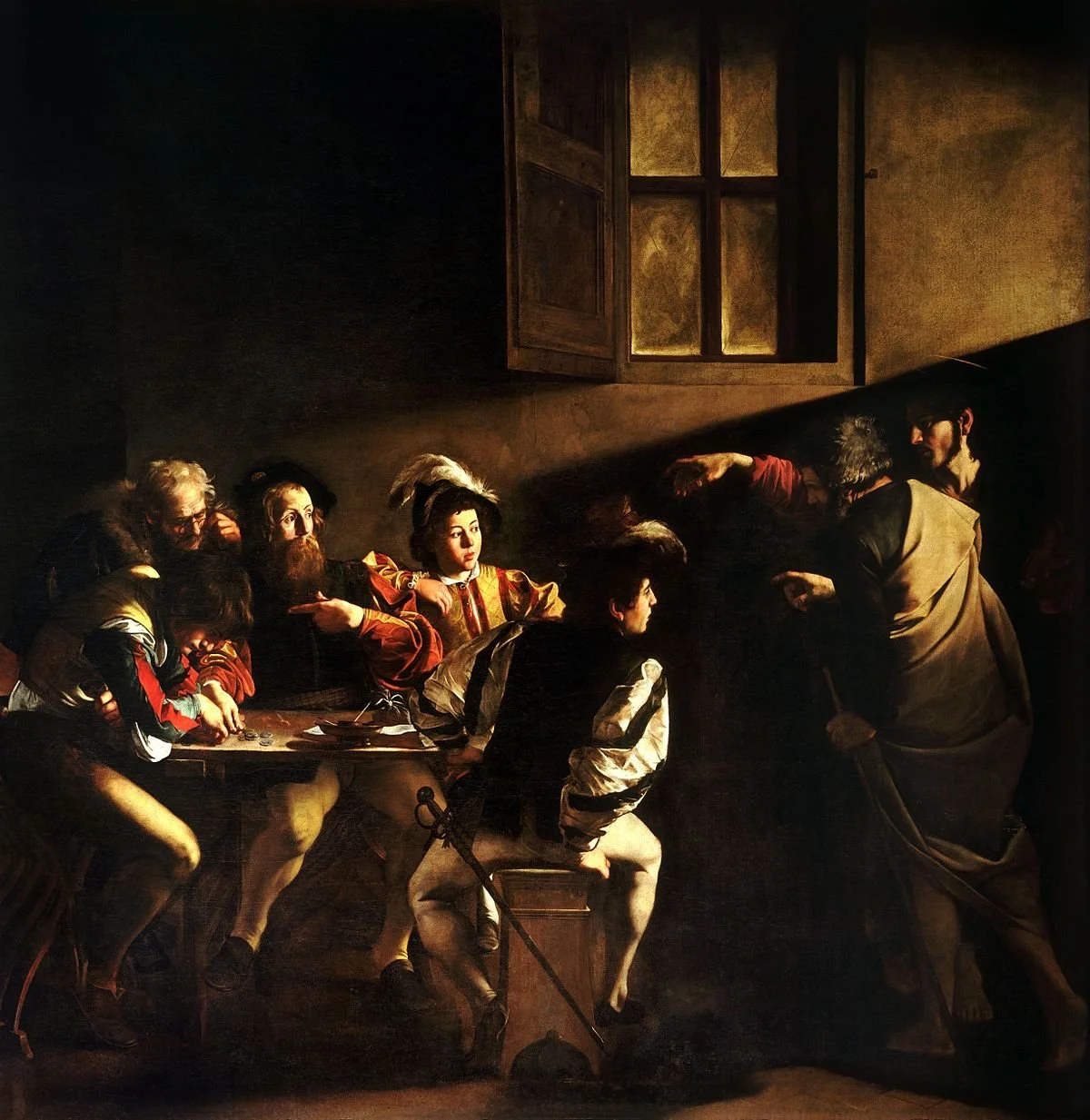
The Calling of Saint Matthew
San Luigi dei Francesi
Start here, a few steps from Piazza Navona and an easy walk from the Pantheon. In the Contarelli Chapel, in the far left corner of the church, hang the three paintings that made Caravaggio famous: The Calling of Saint Matthew, The Inspiration of Saint Matthew and The Martyrdom of Saint Matthew. In The Calling, a heavenly shaft of light cuts across a dim room as Christ points at a tax collector counting coins. Matthew’s own hand, pointing back at himself as if to ask, “Me?” This painting speaks to the human capacity for change, and to the longing we all share to become the best version of ourselves.
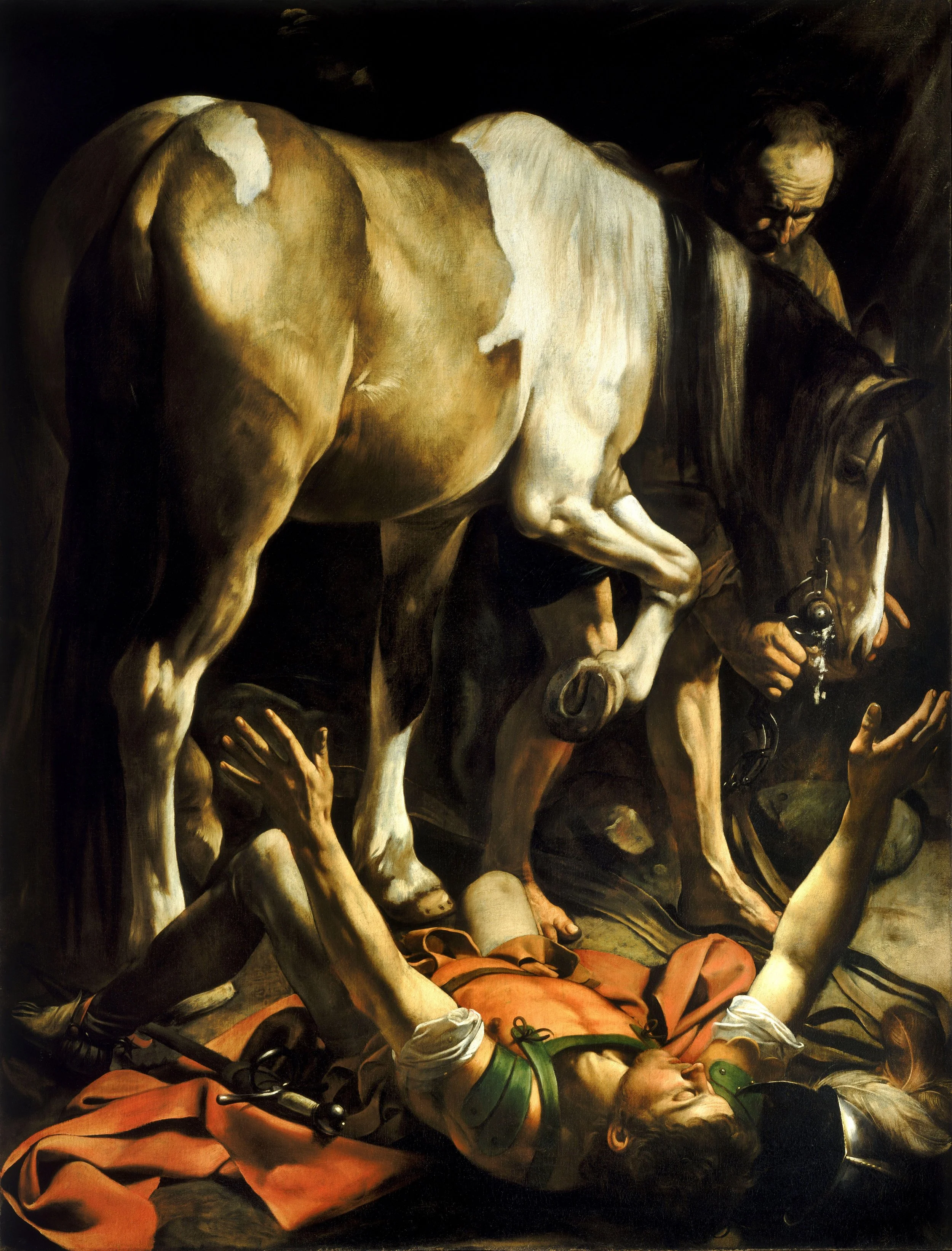
The Conversion of Saint Paul
Santa Maria del Popolo
At the edge of the Piazza del Popolo, the small Cerasi Chapel holds two masterpieces facing each other: The Conversion of Saint Paul, with Paul flung on his back beneath an enormous horse, and The Crucifixion of Saint Peter, where three laborers strain to raise the cross. Both works were controversial in their time. Caravaggio’s first versions were replaced, and some viewers objected that the horse and the laborers’ rough, ordinary bodies took up more space than the saints themselves, and yet that is exactly the point. Paul lies with his eyes closed and his arms open, receiving a light he did not earn and cannot see, a conversion that happens within, as all important change must. Across the chapel, Peter, an old man, is lifted upside down by workers whose faces we never see. Caravaggio portrays his martyrdom not as glory but as struggle and quiet acceptance. Together they show faith at its most human: sudden grace, and the cost of following it.
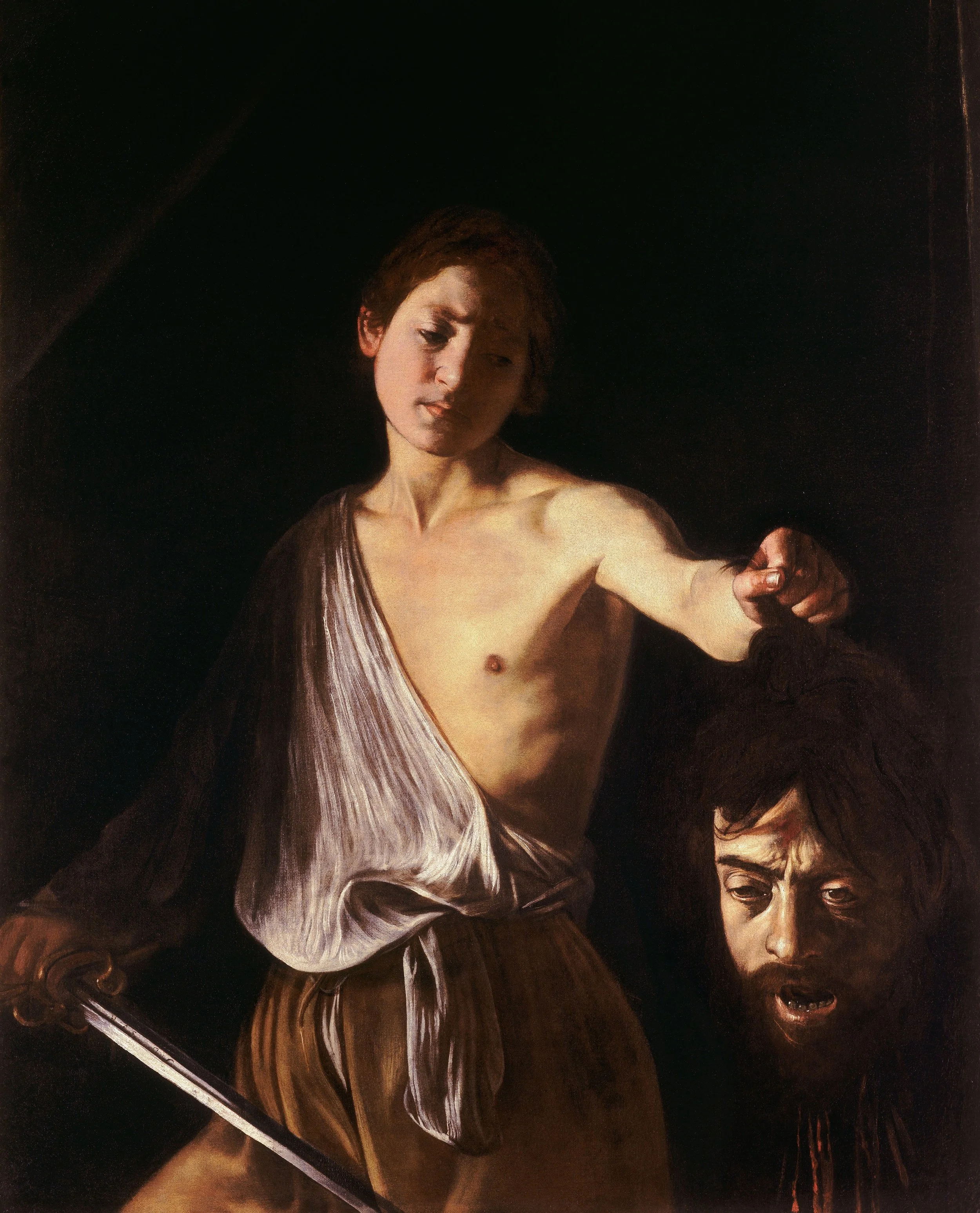
David with the Head of Goliath
The Borghese Gallery
Book ahead, entry is by timed reservation only. The Borghese holds more Caravaggios than anywhere in the world, from the youthful Boy with a Basket of Fruit and Sick Bacchus (thought to be a self-portrait) to the haunting David with the Head of Goliath. Caravaggio painted his own image as the decapitated head of the giant Goliath. Only when you stand it in front of this painting can you truly appreciate the nuances of victory and pity conveyed in David’s expression. Visitors tend to observe this work longer than most, contemplating their own mixed emotions.
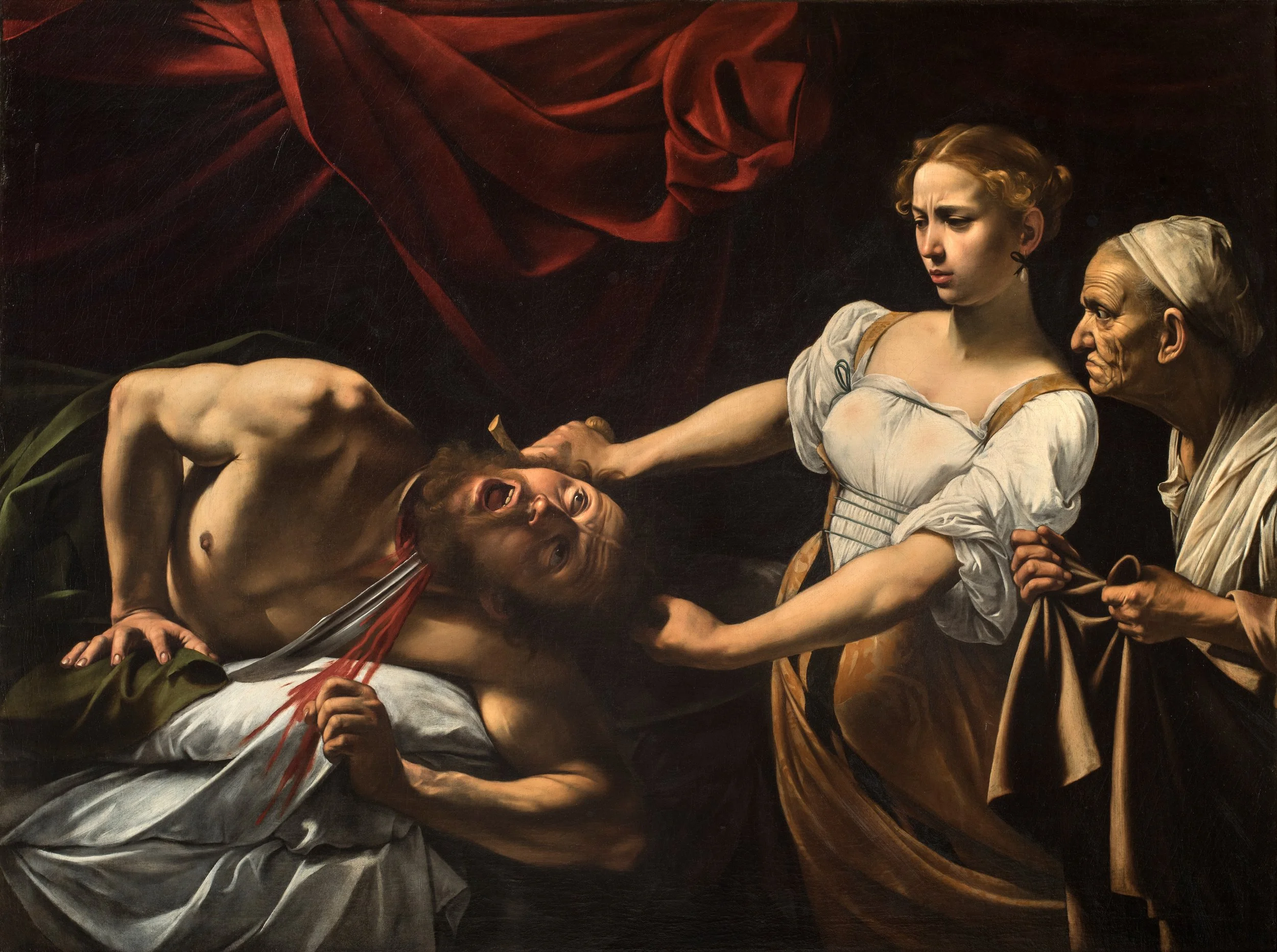
Judith Slaying Holofernes
Palazzo Barberini
Here you will find Judith Beheading Holofernes, one of the most startling paintings of the Baroque. Judith’s expression, which is focused and determined, also hints at reluctance. In the Old Testament story, Judith saves her people from the Assyrian army by entering the enemy camp alone and killing its general, an act of faith and courage when the men around her had given up hope. Caravaggio shows her not as a triumphant heroine but as a woman doing something that must be done. The painting influenced a generation of Baroque artists, above all Artemisia Gentileschi, whose own versions of Judith give the heroine definitive strength and resolve. Together, their paintings say something essential about faith, perseverance and the heroism of women.
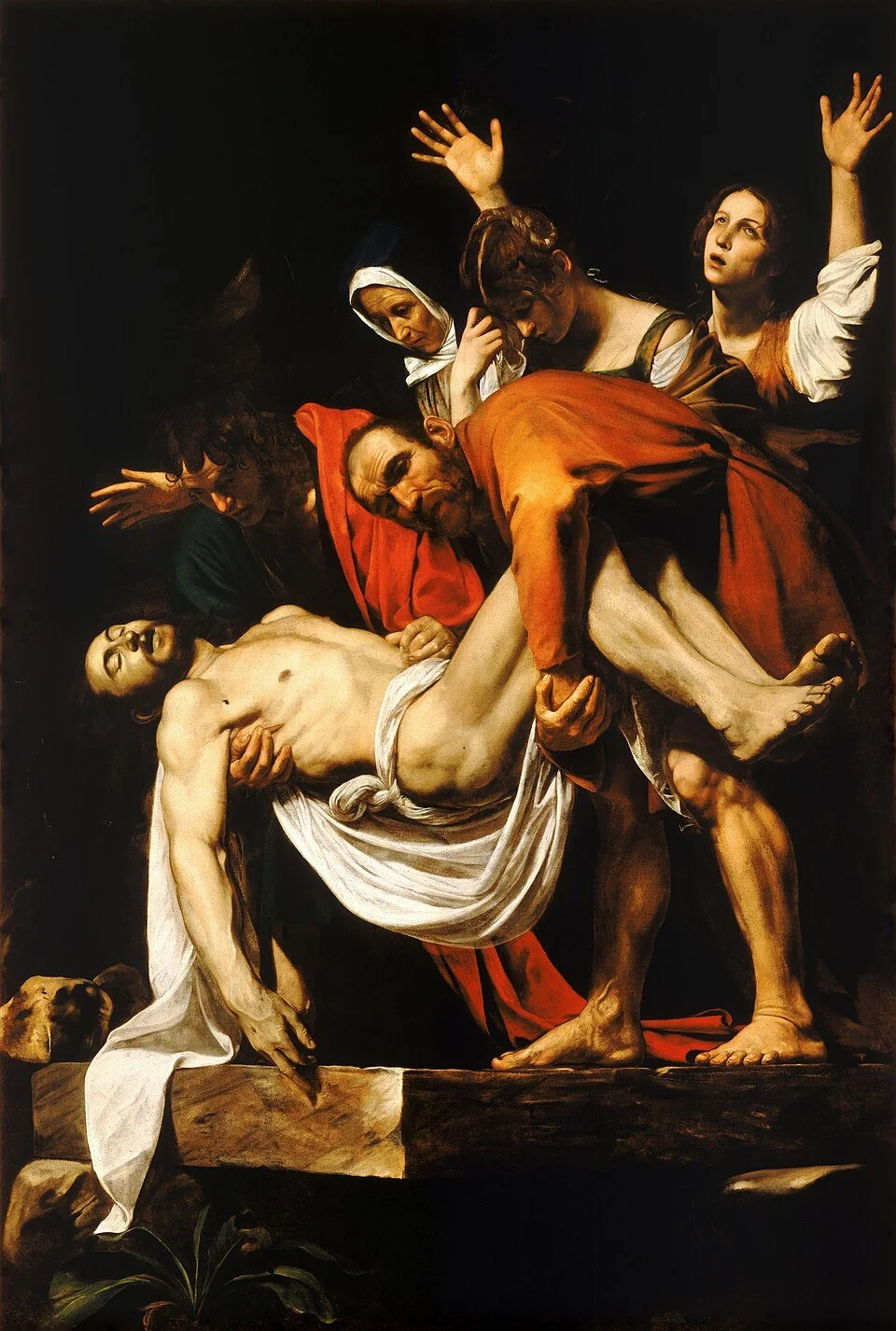
The Entombment
The Vatican Pinacoteca
After the crowds of the Sistine Chapel, visit the picture gallery to see The Entombment. The figures are lowering Christ’s body straight down towards the viewer. Painted as an altarpiece, it was designed so that the body descends toward the very altar where Mass was celebrated, linking the painted moment to the living ritual in front of it. The corner of the stone slab juts out toward us, as if we are standing at the edge of the tomb, and Nicodemus, bearing the weight of Christ’s legs, turns to look directly at us. The viewer becomes a part of the sorrow and the hope of the moment.
How to see them
Start at the churches in the morning, when they are quieter, and check opening hours, since they often close in the early afternoon. Visit the Borghese on your reserved time slot, and give each painting time. When you contemplate a Caravaggio long enough the darkness gives way to detail, and then to something more: a clarity about your own emotions, and a sense that life’s deepest questions have, for a moment, been answered.
Planning a trip to Rome? I offer private museum lectures and custom itineraries that bring works like these to life before you go.
